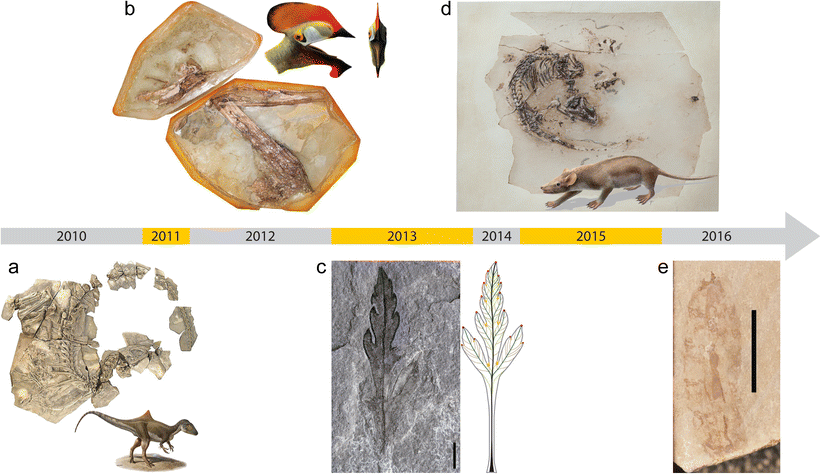
The province of Cuenca is known not only for its historical and archaeological heritage but also for its extraordinary paleontological richness. Among the most important fossil sites stands out Las Hoyas, considered one of the most significant fossil deposits in Europe for studying the Early Cretaceous period.
This site has yielded exceptionally well-preserved fossils that provide crucial information about the ecosystems that existed more than 125 million years ago. Thanks to decades of research, Las Hoyas has become an internationally recognized scientific reference and an essential source of knowledge about the evolution of life on Earth.
🌍 A Journey into the Past: The Early Cretaceous
To understand the importance of Las Hoyas, it is necessary to travel back millions of years in time. During the Early Cretaceous, the area that is now the province of Cuenca looked very different from today.
Instead of mountains and deep valleys, the landscape was dominated by:
-
Large freshwater lagoons
-
Marshy areas with abundant vegetation
-
A warm and humid climate
-
Ecosystems rich in both plant and animal life
These environmental conditions favored the formation of very fine sediments that allowed organic remains to be preserved with exceptional detail.
Because of these geological conditions, fossils from Las Hoyas are preserved in extraordinary states, often revealing delicate structures that are rarely found in other fossil sites.
🦖 Discovery and Scientific Research
The fossil site of Las Hoyas began to be systematically studied in the late 20th century. Since then, several research teams have carried out scientific excavations in the area.
These excavations have uncovered thousands of fossils belonging to different groups of organisms, including:
-
Primitive fish
-
Aquatic reptiles
-
Dinosaurs
-
Early birds
-
Insects
-
Fossil plants
Each new discovery helps scientists reconstruct the ecosystem that existed in this region during the Cretaceous period.
🐦 Exceptional Fossils: Early Birds
One of the most remarkable aspects of Las Hoyas is the large number of primitive bird fossils discovered at the site.
These fossils have allowed scientists to study the evolutionary transition from dinosaurs to birds—one of the most fascinating evolutionary processes in natural history.
Researchers have identified species that display intermediate characteristics between dinosaurs and modern birds, such as:
-
Primitive feathers
-
Teeth in the beak
-
Skeletal structures adapted for flight
These discoveries have been fundamental in understanding how modern birds evolved.
🐟 Fish, Reptiles, and Other Animals
In addition to birds, the site has produced numerous fossils of other animals that inhabited the lagoons and wetlands of the region.
Among the most notable findings are:
-
Perfectly preserved fish
-
Primitive turtles
-
Ancient crocodiles
-
Small reptiles
-
Fossilized insects
The diversity of species discovered demonstrates that Las Hoyas was an extremely rich and complex ecosystem.
🌿 Fossil Flora and Ecosystem Reconstruction
Plant remains discovered at the site have also been essential for understanding the natural environment of the Cretaceous period.
Among the fossilized plants identified are:
-
Ferns
-
Primitive conifers
-
Aquatic plants
-
Fossilized leaves and seeds
These discoveries allow scientists to reconstruct what the landscape looked like millions of years ago and how different species interacted within the ecosystem.
🔬 International Scientific Importance
Las Hoyas is considered one of the most important lagerstätten in the world. This term refers to fossil deposits that preserve organisms with exceptional detail.
The scientific importance of Las Hoyas lies in several key aspects:
-
Extraordinary preservation of fossils
-
High diversity of species
-
Detailed information about ancient ecosystems
-
Discovery of previously unknown species
Because of these discoveries, many international researchers visit the province of Cuenca each year to study the fossils from the site.
🦴 Connection with the Paleontological Museum
Many fossils discovered at Las Hoyas are preserved and displayed in the Museo Paleontológico de Castilla-La Mancha, located in the city of Cuenca.
This museum houses one of the most important paleontological collections in Spain and allows visitors to learn about the discoveries made in the region.
Among its most notable exhibits are:
-
Dinosaur skeletons
-
Original fossils of primitive birds
-
Reconstructions of Cretaceous ecosystems
-
Interactive displays explaining the evolution of life
The museum plays a key role in scientific outreach and in preserving these important discoveries.
🔎 Scientific Research Methods
Studying the fossils of Las Hoyas requires advanced scientific techniques. Researchers use various methods to analyze the remains found at the site.
Some of the most important techniques include:
-
Electron microscopy to study microscopic structures
-
3D scanning of fossil specimens
-
Chemical analysis of sediment layers
-
Digital reconstructions of extinct species
These technologies allow scientists to obtain extremely detailed information about organisms that lived millions of years ago.
🌍 Educational and Tourist Value
The Las Hoyas fossil site and the Paleontological Museum have made Cuenca an important destination for scientific and educational tourism.
Every year thousands of visitors, students, and families travel to the city to:
-
Learn about dinosaur evolution
-
Discover prehistoric ecosystems
-
Observe real fossils
-
Participate in educational activities
This type of tourism also contributes to the preservation and promotion of the region’s natural heritage.
🧭 Conclusion
The Las Hoyas fossil site represents one of the most important paleontological discoveries in Spain. Thanks to the exceptional preservation of its fossils, scientists have been able to reconstruct in remarkable detail what life on Earth looked like more than 125 million years ago.
This scientific legacy continues to be the subject of ongoing research and continues to provide new knowledge about the evolution of living organisms. At the same time, its connection with the Museo Paleontológico de Castilla-La Manchaallows these discoveries to be shared with the public, inspiring interest in science and natural history.